
THERMAL INSPECTIONS
BUILDINGS / ROOFS / SOLAR PANELS / ELECTRICAL INFRASTRUCTURE
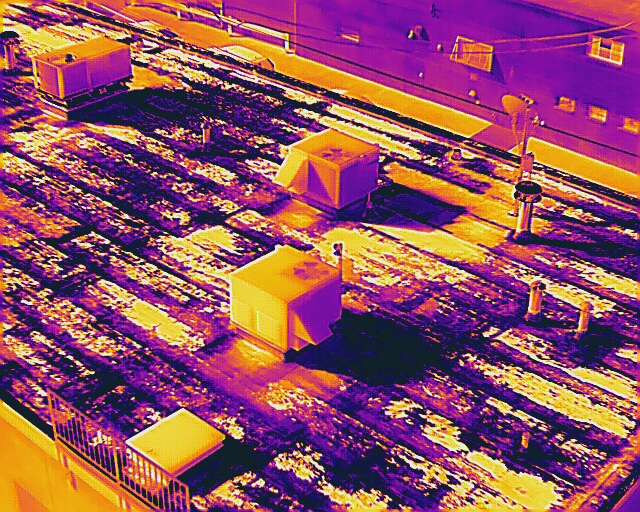
Immersive-Flight harnesses the power of advanced thermal imaging technology to offer highly accurate insights into various structural weaknesses and vulnerabilities. By employing sophisticated techniques, we identify temperature anomalies that reveal hidden issues within structures that might otherwise go unnoticed. This proactive approach facilitates early detection of problems, ensuring the safety and integrity of buildings, roofs, solar panel arrays, and electrical infrastructure — reducing downtime costs and maximizing efficiency and profitability.
THERMAL INSPECTION RESULTS


STUCCO WATER DAMAGE EXAMPLE
THE PROBLEM
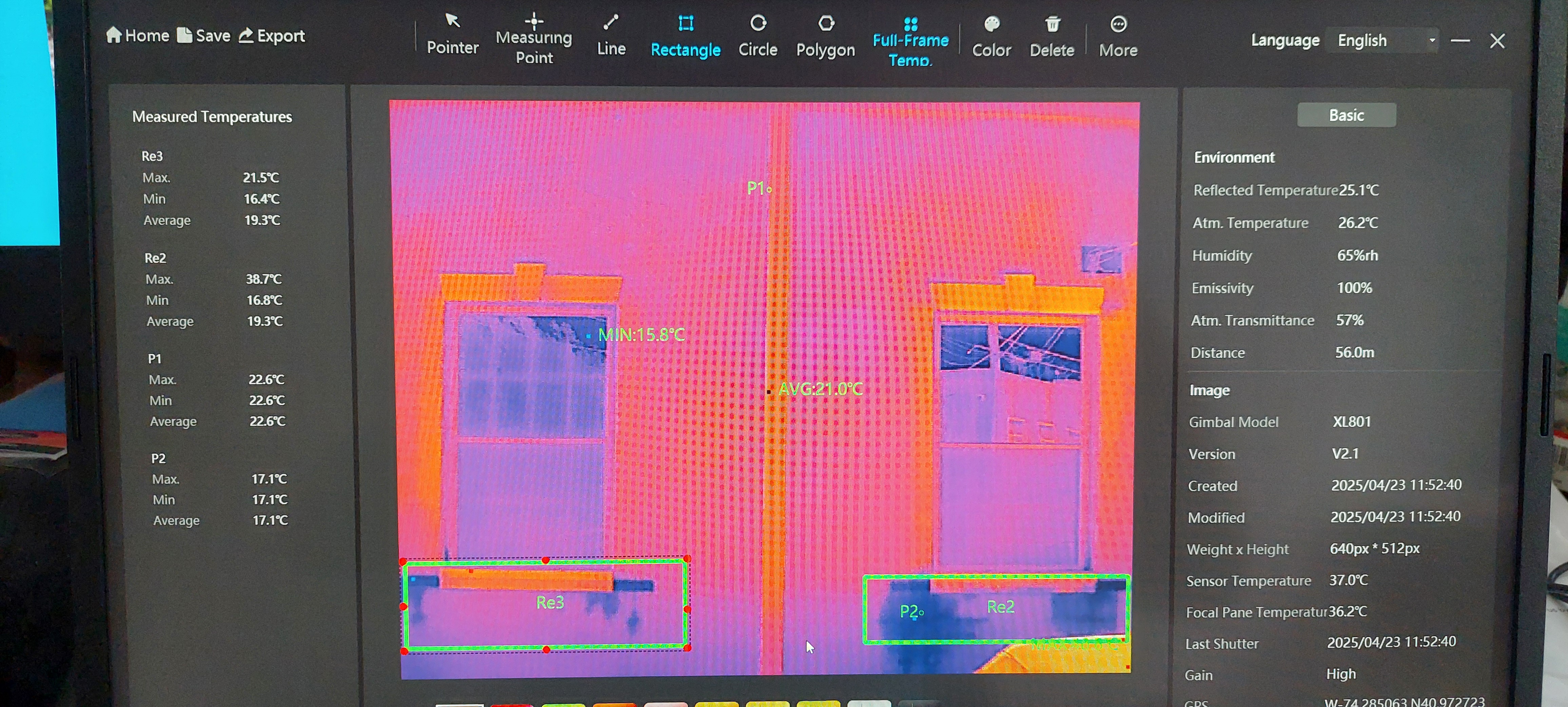
The standard image shows cracks under each stucco window sill. The thermal image report of the same two windows shows evidence of water penetration beneath the surface of the stucco exterior. The green rectangular areas of dark color indicate the temperature difference that is easily identified.
THE SOLUTION
The client was informed of the extent of the damage to both window sills and recommended that repairs are needed to prevent further damage and possible mold problems, saving the client money.

SOLAR PANEL EXAMPLE
THE PROBLEM
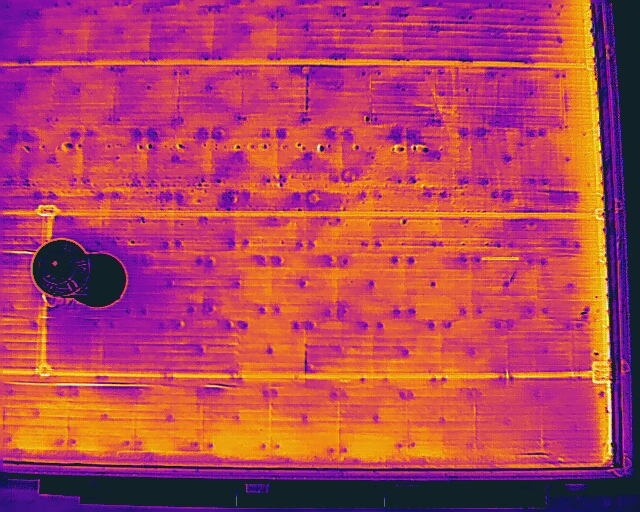
The standard image shows debris and possible damage on the surface of the solar panel. The yellow arrow points to the thermal image of the same solar panel which shows extensive damage not visible to the naked eye.
THE SOLUTION
The client is informed of the damaged solar panel and suggested replacement of that particular panel to restore optimal solar array efficiency. The thermal image shows normal functioning panels — the upper array is being exposed to morning sunlight, showing orange (higher temp); the bottom array is not exposed and shows purple (lower temp).


SKYLIGHT WATER DAMAGE EXAMPLE
THE PROBLEM
The standard image shows surface damage around the flashing areas of the skylight. The thermal image shows insufficient insulation and possible water penetration as indicated in the green circled areas.
THE SOLUTION
The client was informed of the potential mold hazard and sub-surface water damage to the flashing. Recommending replacing flashing on the exterior in conjunction with replacing interior insulation and caulking around the skylight.
EXCLUSIVE THERMAL E-BOOK
Sign up and get access to our exclusive subscriber content — a comprehensive thermal inspection guide.
ITC CERTIFIED THERMOGRAPHER
Our thermal inspections are performed by a certified professional trained and examined by the Infrared Training Center — the world's leading provider of infrared thermography education.
ABOUT THE INFRARED TRAINING CENTER
The Infrared Training Center (ITC) is the world's largest provider of infrared thermography training and certification. Founded in 1990, ITC has trained and certified over 35,000 thermographers across more than 100 countries. Their curriculum is developed in accordance with ISO 18436-7 and ASNT standards — the recognized international benchmarks for thermographer competency.
ITC's sUAS (small Unmanned Aerial Systems) Level I program is a specialized certification for drone-mounted thermal camera operators, combining rigorous infrared theory with real-world aerial application techniques. Candidates must attend in-person instruction, pass practical exercises, and successfully complete both written and practical final examinations to earn certification.
THE CERTIFICATION PROCESS
CLASSROOM INSTRUCTION
In-depth study of infrared physics, heat transfer principles, camera operation, image analysis, and sUAS-specific applications.
PRACTICAL EXERCISES
Hands-on field exercises capturing and interpreting thermal imagery from aerial platforms under instructor supervision.
WRITTEN EXAMINATION
Comprehensive written exam testing theoretical knowledge of thermography standards and principles.
PRACTICAL EXAMINATION
Live demonstration of thermographic skill, equipment proficiency, and accurate defect identification.
LEVEL I sUAS
CERTIFIED THERMOGRAPHER
LEVEL I sUAS
Infrared Training Center
Richard Moran
#219877657
CERTIFIED
INFRARED THERMOGRAPHER
Passed practical and final exams meeting all ITC requirements for Level I sUAS thermography certification.